
“Family Formation is a Determinant of Poverty”
Treoir, the national information service for unmarried parents and their children, held its Annual General Meeting at the Mansion House on Tuesday, where speakers highlighted the growing financial pressures facing one-parent and non-marital families amid Ireland’s ongoing housing and cost-of-living crises.
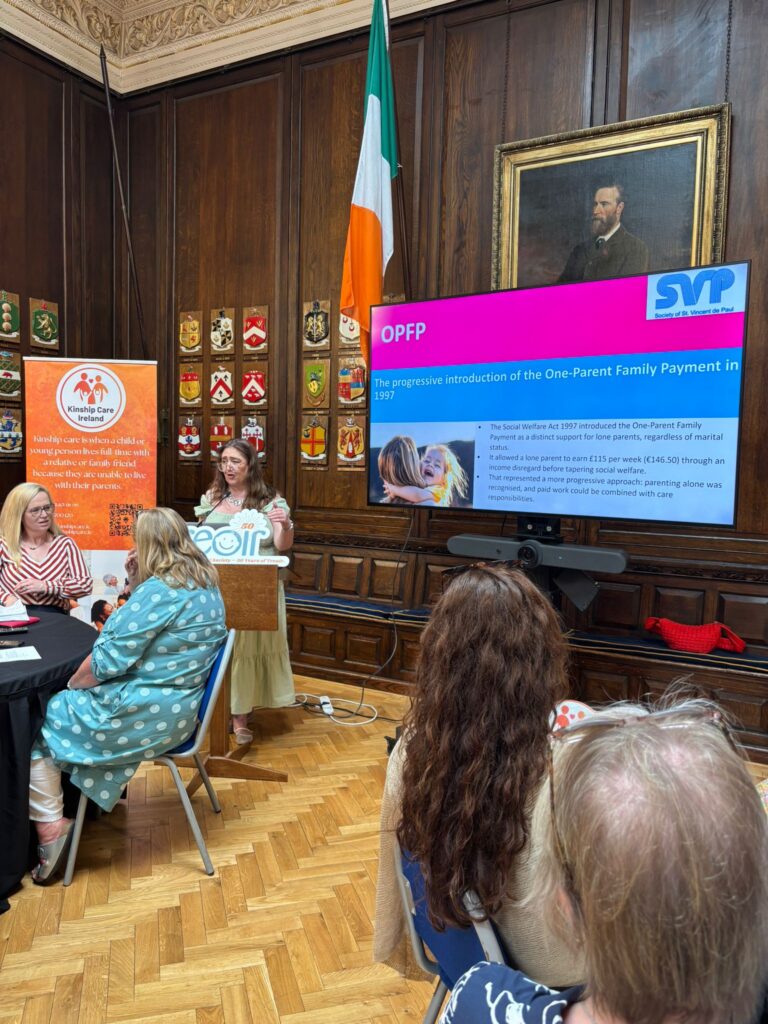
Addressing attendees, Louise Bayliss, Head of Policy and Social Justice with Saint Vincent de Paul, pointed to recent SILC 2025 data showing that while overall child poverty rates have decreased nationally, poverty among children in one-parent families has increased.
Ms Bayliss said the housing and cost-of-living crises are disproportionately affecting one-parent families, with children in these households now among those most at risk of poverty and homelessness in Ireland, saying:
“It is quite clear that family formation is a determinant of poverty.”
Speaking about widening inequality, she said:
“The gap has widened, cost-of-living supports are gone, and prices are up.”
The scale of housing insecurity facing families was further highlighted by Treoir Senior Information Officer Sinéad Murray, who revealed that 48% of callers to Treoir’s national information service in 2025 were living in insecure accommodation, including private rented accommodation, living with grandparents, or staying in a partner’s home.
A further 6% were experiencing homelessness, including rough sleeping, couch surfing, emergency accommodation, and domestic violence refuges.
Ms Murray also highlighted the impact of the housing crisis on separated parents
“It cannot be overstated how much the housing crisis affects parents’ ability to parent their children” she said.
“On our phone line, we heard from fathers trying to come to terms with relationships ending while sleeping in cars or work vans. Even when they reached out to local authorities for support, they were often offered accommodation that did not recognise their dependent children or facilitate shared parenting arrangements. Years of quality time and parental responsibility are being lost because of the housing crisis.”
When looking to solutions to close the gap Ms Bayliss looked to the One-Parent Family Payment income disregard in 1997, describing it as “transformative,” as it allowed lone parents to work part-time while retaining their social welfare support.
“It was a pathway out of poverty and recognised the dual role of a lone parent — as both a carer and an earner,” she said.
However, she warned that the scheme has failed to keep pace with rising costs and wages. While the income disregard stood at €146.50 in 1997 and allowed lone parents to work approximately 26 hours per week on minimum wage before their payment was affected, the disregard now stands at €160 in 2025 — allowing for just 11.5 hours of minimum wage work.
Treoir Policy Officer Gayle Smith called for the income disregard attached to both the One-Parent Family Payment and Jobseeker’s Transitional Payment to be increased and linked to future minimum wage increases.
She said the current system leaves many families trapped financially.
“Most lone parents know what it means to live week to week. The system lacks the flexibility families need to achieve financial security.”